
My BLOG

"Even a small post can lead to big changes" .
"Branding doesn’t need big words, a simple message is enough."
"One post – one idea – is enough to change someone's mind".
"Branding doesn’t need big words, a simple message is enough."
"A one-second post can leave a lasting impact."
Scope of Digital Marketing in the Future
Digital marketing is rapidly transforming the way businesses connect with consumers. With the continuous advancement of technology and increasing internet penetration, the future of digital marketing looks incredibly promising and filled with endless possibilities.
One of the key factors driving the scope of digital marketing is the growing online presence of businesses. As companies shift from traditional to digital platforms, the demand for skilled digital marketers is on the rise. From small startups to multinational corporations, every brand is now investing in digital marketing to increase visibility, build relationships with customers, and boost sales.
Technologies like Artificial Intelligence (AI), Machine Learning, and automation are also shaping the future of this field. Marketers can now target audiences more accurately, automate repetitive tasks, and deliver personalized experiences based on user behavior and preferences. Voice search, visual search, and the use of chatbots are further enhancing how customers interact with brands online.


Role of Artificial Intelligence in Digital Marketing
Artificial Intelligence (AI) is transforming the way digital marketing works by introducing smarter, faster, and more personalized approaches. One of the key roles of AI in digital marketing is its ability to analyze large amounts of customer data to understand behavior, preferences, and patterns. This allows marketers to create highly targeted and personalized campaigns, improving user engagement and customer satisfaction. Another major area where AI is making an impact is automation. From email marketing to social media posting and customer service, AI tools can handle repetitive tasks efficiently. AI-powered chatbots, for example, provide 24/7 customer support, answer frequently asked questions, and guide users through their buying journey without human help.AI also plays a vital role in optimizing advertising. It can automatically adjust ad placements, targeting, and budgets in real-time based on performance. This not only saves time but also increases return on investment by showing the right ads to the right people. Additionally, AI supports content creation by generating text, suggesting topics, and curating relevant information for specific audiences.In short, AI is helping businesses deliver better customer experiences, reduce marketing costs, and improve campaign results. As technology advances, the role of AI in digital marketing will continue to grow, making it an essential tool for modern marketers.
Branding Analysis
Branding analysis is the process of evaluating a brand’s market position, identity, communication style, and customer perception. It serves as a foundation for business success, as the way a brand is seen by its audience greatly influences trust, loyalty, and overall growth. An effective branding analysis includes reviewing elements like the logo, color palette, tone of voice, customer feedback, competitor branding, and current market trends. It helps answer key questions like: Is the brand consistent? Does it connect with the target audience? How does it stand out from competitors? The analysis identifies strengths, weaknesses, opportunities, and threats (SWOT) to guide future branding strategies.
IDENTIFYING STRENGTH
“Unique products or services, a skilled and competent team, and a strong brand reputation.”
Strategic location or advanced technology. A well-executed branding analysis helps a business stay relevant, recognizable, and relatable in a competitive market. It enables informed decisions on repositioning, rebranding, or strategic marketing. Ultimately, strong branding is not just about how a brand looks — but how it’s perceived and trusted by people. includes reviewing elements like the logo, color palette, tone of voice, customer feedback, competitor branding, and current market trends.
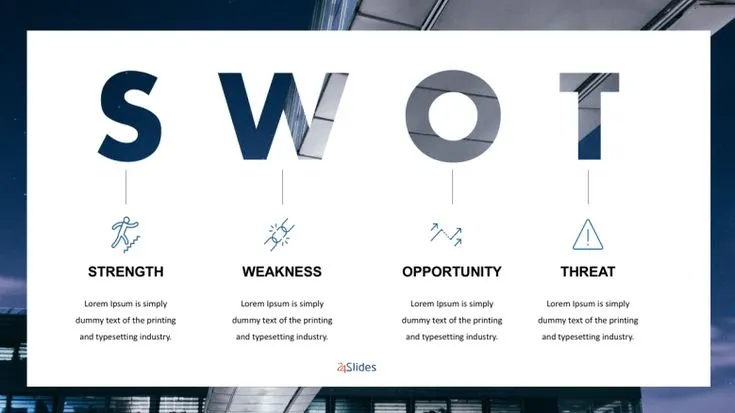
A tool for developing the right business strategy.
What is SWOT analysis ?SWOT analysis is a strategic planning method used to evaluate the strengths, weaknesses, opportunities, and theirs of business. It helps businesses understand their position better and determine the next strategic steps. FOR KEY COMPONENTS OF SWOTSTRENGTHS internal factors that give a competitive advantage.
WEAKNESSES internal areas that need improvement OPPORTUNITIES external chance to grow and expand THREATS external factors that can jeopardize business success. branding analysis includes reviewing elements like the logo, color palette, tone of voice, customer feedback, competitor branding, and current market trends. It helps answer key questions like: Is the brand consistent? Does it connect with the target audience? How does it stand out from competitors? The analysis identifies strengths, weaknesses, opportunities, and threats (SWOT) to guide future branding strategies.